

Overview
The Virtual TryOn API provides developers with the capability to integrate our try-on model directly into their applications. Built on a RESTful architecture, it currently supports only HTTP endpoints.Base URL
The base URL for the Virtual TryOn API is:Authentication
Access to the Virtual TryOn API is secured through the use of API keys.API Key Usage
Include your API key in the request headers:Error Handling
The API uses conventional HTTP response codes to indicate success or failure:API Parameters Guide
Model Image
image URL | base64model-image refers to the source image of the individual on whom the virtual try-on will be applied. This image can be submitted either as a publicly accessible URL or a base64-encoded string.
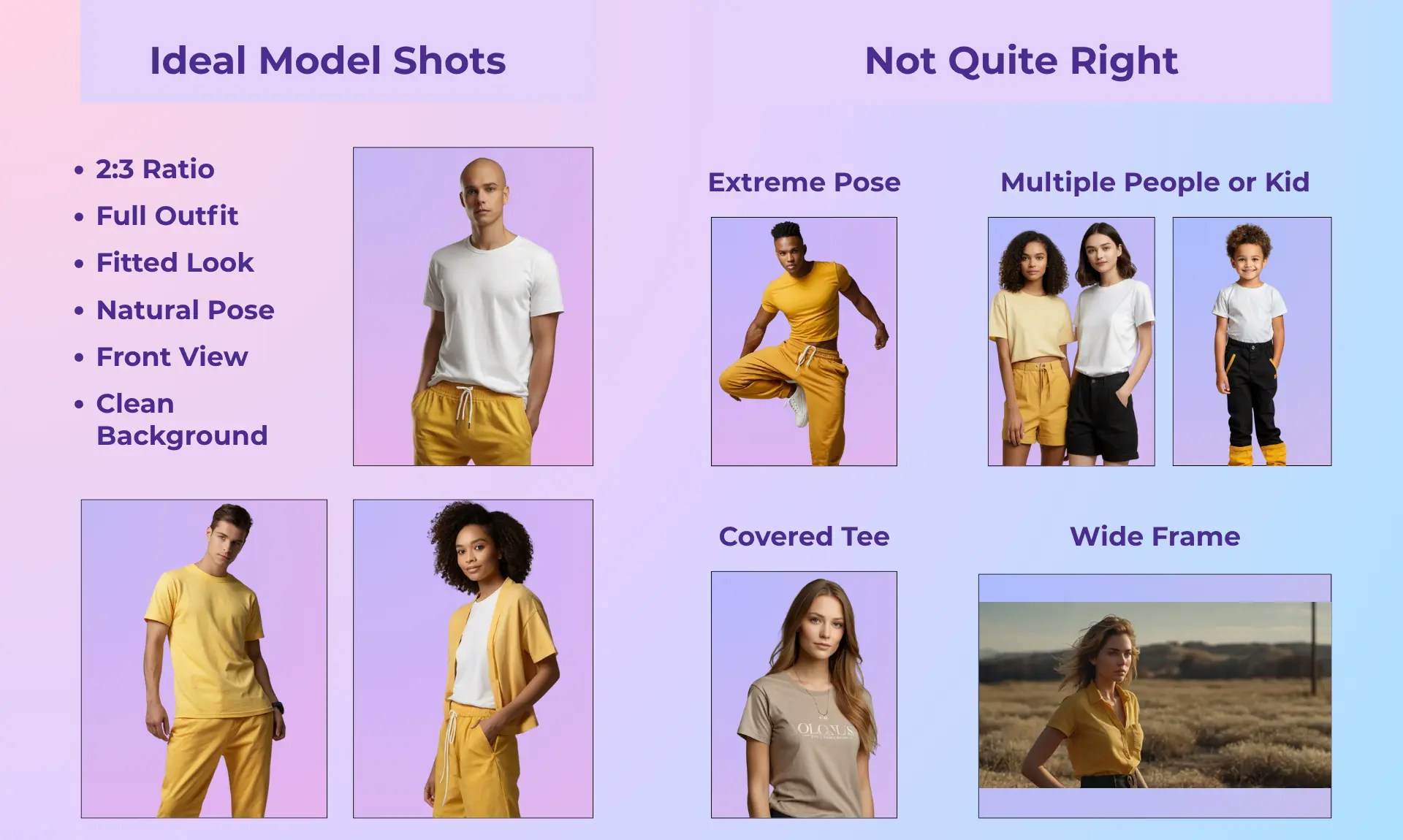
Garment Image
image URL | base64garment-image is the visual representation of the clothing item intended for virtual try-on with the model-image. You can provide this input either as a direct image URL or as a base64-encoded string.
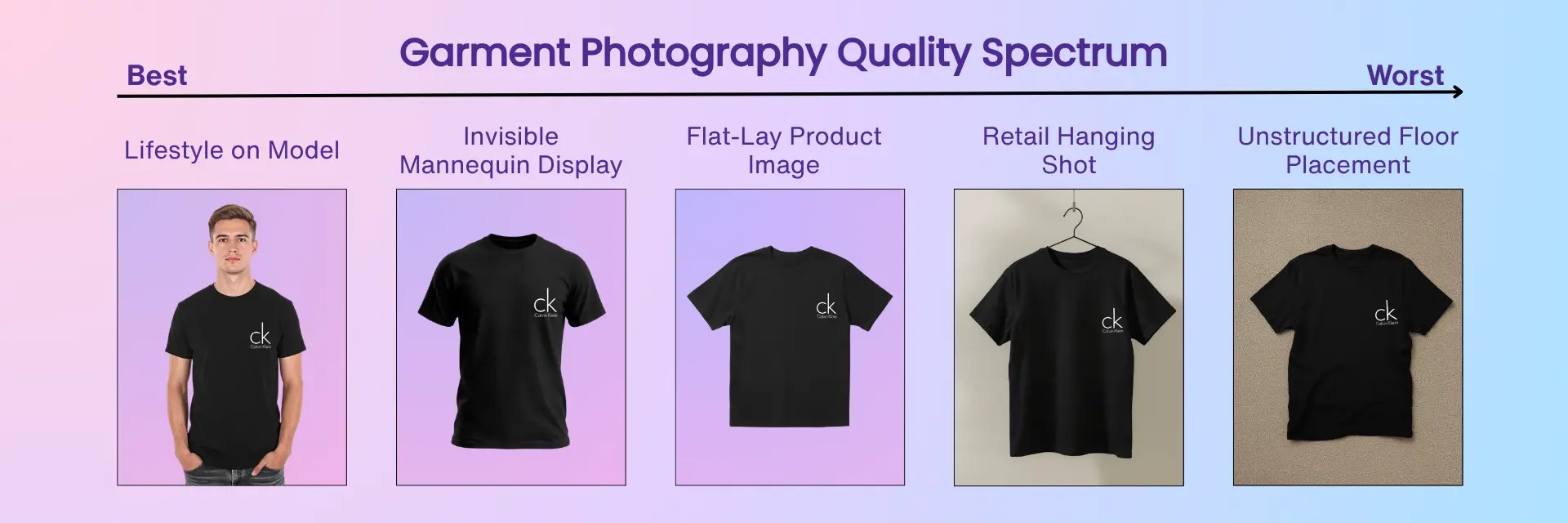
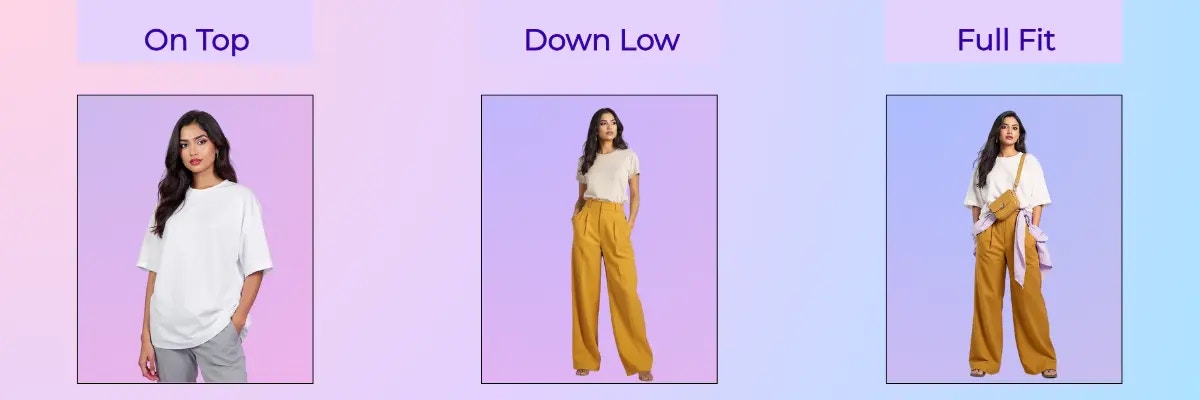
Category
stringcategory identifies the type of garment present in the garment-image. This guides the virtual try-on engine in selecting the appropriate region to apply the clothing. For images with multiple items (e.g., top and bottom), use this to prioritize the desired garment.
Default: auto — automatically infers the garment type.
Mode
stringmode determines the balance between processing speed and output quality.
Moderation Level
‘conservative’ | ‘permissive’ | ‘none’moderation_level controls how strictly the API filters garment images for content sensitivity. The default is permissive.
conservative: Filters out revealing garments. Recommended for modesty-sensitive use cases.permissive: Allows most garments including swimwear and underwear, while rejecting explicit nudity.none: Disables all content filtering. Use with caution.
Segmentation Free
booleansegmentation_free controls whether the system skips explicit garment segmentation.
true: Enables direct garment fitting without isolating clothing.false: Enforces clothing segmentation. Use if artifacts from the original garments interfere with results.
Output Format
‘png’ | ‘jpeg’output_format defines the desired image format for the generated try-on result.
png: High-quality output with no compression loss.jpeg: Faster response with mild compression. Better for real-time use.